1
Leave from a Kelp Forest edge
Do not start from the middle of the starter biome. Pick a beaconed edge or first base, then swim out on a single heading so the return path stays readable.
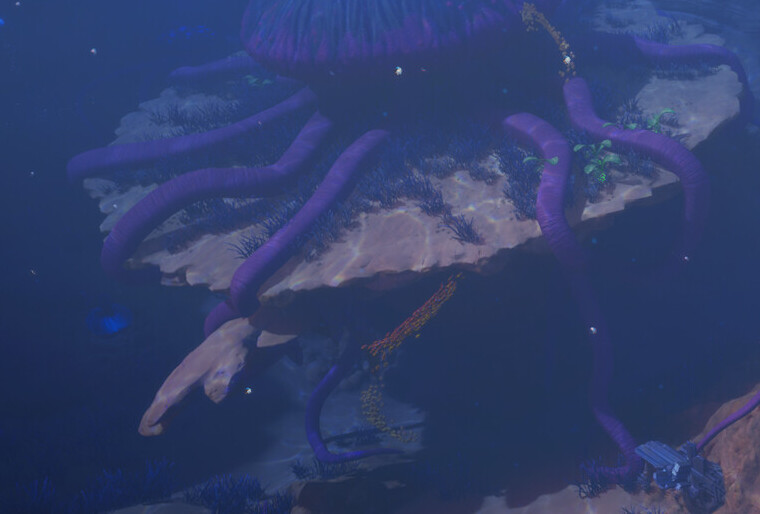
A low-danger mid-depth biome built around raised shelves, glowing flora, and ridge-to-ridge navigation. The Jelly Plateaus are the natural step after a stable Kelp Forest base: more useful scans, better base sites, and the first taste of deeper route planning without apex-level pressure.
Updated 2026-10-04.
Do not start from the middle of the starter biome. Pick a beaconed edge or first base, then swim out on a single heading so the return path stays readable.
The Plateaus read best as shelves rather than open water. Move between raised ridges, scan from the high points, and avoid dropping into every gap until you know the exit.
The biome identity comes from bioluminescent, jellyfish-adjacent flora. These are the highest-value scans because they are easy to miss in the visual clutter.
If you find a flat shelf with easy Kelp Forest access and one deeper exit, place a beacon. The Jelly Plateaus are one of the cleanest early relocation zones.
Expect a step above Kelp Forest basics without the heat, pressure, or leviathan risk of later zones.
Useful scan data and a likely future DNA Modification family as the Early Access catalogue expands.
Ridge edges and plateau pockets are better search patterns than swimming through the open middle.
Predator pressure is light enough that solo players can gather calmly if they keep oxygen and heading discipline.
The defining scan family for the biome. Scan multiple shapes instead of assuming one entry covers all variants.
Territorial herbivore. Keep a retreat route open and move away if it begins a threat display.
Small flora on ledges can be easy to overlook because the larger glowing silhouettes dominate the scene.
Tall shelf edges, arches, and bright flora clusters make practical navigation markers even when they are not formal PDA entries.
The Jelly Plateaus are where the map starts asking players to think in routes instead of circles. The Kelp Forest lets you reset from almost any mistake by surfacing. The Plateaus still feel safe, but shelves, ledges, and glowing clutter make heading control more important. That is exactly why the biome is useful: it teaches deeper exploration without throwing the Collector Leviathan at you.
Treat the brightest flora clusters as navigation pins. Scan them, but also use them as visual signposts for the return path. If a ridge top gives you one clean line back to Kelp Forest and one clean line toward deeper water, it is probably worth marking for a future base.
It sits between the Kelp Forest starter pocket and deeper biome routes. Most players reach it from a Kelp Forest edge during session two or early session three, after the first base and scan loop are stable.
Only mildly. The danger rating is 2 / 5 because predator pressure is low and the biome gives readable terrain. The main hazard is losing your return route among similar shelves, not being hunted by a resident apex predator.
Start with the bioluminescent jelly flora, then scan small ledge plants, nearby fauna, giving territorial Hammerheads room, and any salvage or terrain-adjacent entries the PDA allows. The visual density makes duplicate-looking flora worth checking one by one.
Yes, it is one of the stronger early relocation candidates. Build on a flat shelf near a clear route back to the Kelp Forest and a separate route toward deeper progression. Avoid placing the base in a pocket with only one exit.
Usually no. It is not extreme danger, but it asks for better oxygen rhythm and navigation than a fresh save has. Cure Digestive Incompatibility, scan the Kelp Forest, and place a starter base before pushing here.
The confirmed launch naming around Plateaus is still settling. This page tracks the bioluminescent mid-depth shelf biome players commonly identify as Jelly Plateaus; if Unknown Worlds standardizes the in-game name differently, this page will be renamed with redirects.
Use these pages to connect the Plateaus route with early scans and deeper travel.
Return to the Subnautica 2 biome index.
The safe starter biome most Plateaus routes begin from.
The next moderate-risk scan and loot destination.
Territorial mid-depth scan target seen across vegetation zones.
The vehicle that turns mid-depth travel into repeatable routes.
Why the Plateaus should usually wait until after hour one.